Empowering Women Through Awareness & Care
A safe, private space to learn, track, and connect — backed by WHO guidelines and Government of India resources.
❤️ You're not alone. Millions of women stand with you.
before first period
menstrual materials
periods with adults
menstruation is taboo
Menstrual Health Education
According to the World Health Organization (WHO), menstrual health is an integral part of sexual and reproductive health and rights.
Source: WHO Fact Sheets ↗Awareness Posters
Share these posters in your community or school.


Research Insights
Key findings from our three published public health reports on menstrual equity in India and globally.
The Silence That Harms: How Stigma Blocks Menstrual Discussion
Across cultures, income levels, and education systems, menstruation remains one of the most silenced subjects in a girl's life. This silence is not passive — it is enforced, learned, and inherited. Breaking it is one of the most urgent challenges in adolescent health.
Stigma does not just silence individuals — it silences entire systems. When a teacher refuses to say the word menstruation in class, she is transmitting an institutional message: this is not something we discuss.
🏠 At Home
Mothers whisper warnings in private. Fathers are excluded entirely. Menstruation is framed as a secret rather than a normal biological event, teaching girls their bodies require concealment.
🏫 In Schools
Teachers skip or rush through reproductive health units. Mixed-gender classrooms make frank discussion feel impossible. The curriculum exists on paper but is rarely delivered with honesty.
👥 Among Peers
Menstruation becomes a source of teasing and embarrassment. Girls who are visibly unprepared face ridicule, deepening pressure to stay silent about anything period-related.
🌍 In Communities
Religious, cultural, and traditional norms label menstruating women as impure or spiritually dangerous, actively suppressing factual conversation at every level.
📉 On Education
Absenteeism during menstruation, withdrawal from sports, dropout in settings without WASH facilities, and reduced classroom confidence are direct documented outcomes.
🩺 On Health
Untreated dysmenorrhea, PCOS, endometriosis and poor menstrual hygiene increase infection risk. Girls delay seeking reproductive care due to shame enforced by stigma.
Arriving Unprepared: The Menstrual Education Gap
Millions of girls experience their first period without any prior knowledge, causing fear, shame, and long-term consequences for their health, education, and wellbeing. A girl who understands her body arrives at menarche with confidence instead of fear.
The first period is a formative moment. When girls are unprepared, the effects ripple across their education, health, and sense of self for years to come.
😰 Emotional Impact
Studies across South Asia and Sub-Saharan Africa document girls believing they were bleeding to death or had contracted a disease. Acute fears evolve into lasting anxiety and negative body image.
📚 Educational Impact
Unprepared girls are more likely to miss school, avoid communal activities, and in regions without sanitation, permanently withdraw from formal education.
🏥 Health Consequences
Uninformed girls rarely recognise severe dysmenorrhea, PCOS, or endometriosis. They don't seek care and don't practice adequate hygiene, increasing infection risk.
🎯 What Works: Early Education
Teaching menstrual health before age 10 normalises it and reduces fear. Education before menarche is measurably more effective than remedial education after the fact.
👨👩👧 Caregiver Training
Equipping parents and guardians with language and confidence to talk openly with girls at home dramatically improves outcomes. Girls whose mothers spoke openly report far less fear.
♂️ Including Boys Matters
Including boys in menstrual health education reduces stigma at the community level and builds empathy in shared spaces such as schools and homes.
Period Poverty: When Products Are Out of Reach
Period poverty — the inability to access safe, affordable menstrual products — affects hundreds of millions of women globally. It is entirely solvable. What has been lacking is political will. Access to sanitary products is not a privilege. It is a basic health right.
A girl who cannot afford a pad is not simply inconvenienced. She faces a concrete health risk every month that accumulates across years of reproductive life.
📚 The Education Penalty
Girls who cannot manage their periods miss 3–5 school days per cycle. Across a year, this means 36–60 missed school days, directly linked to lower exam performance and dropout.
🔄 The Poverty Trap
Period poverty and economic poverty are mutually reinforcing. When a girl drops out due to menstrual management failure, lifetime earnings decrease — and the cycle repeats for her daughters.
⚠️ Unsafe Substitutes
Rags, newspaper, leaves, bark, and ash are used as substitutes globally — each carrying serious bacterial and fungal infection risks. Overextended product use elevates toxic shock risk.
🏛️ Policy Solutions
20+ countries have eliminated the tampon tax since 2024 (UK, Canada, Australia, Germany, Kenya), reducing prices by 5–20%. Tax repeal paired with access programmes transforms outcomes.
♻️ Reusable Products
Reusable cloth pads and menstrual cups transform access where supply chains for disposables are unreliable. A single cup can last 10 years, eliminating monthly product costs entirely.
🧠 Mental Health Impact
Period poverty causes anxiety, humiliation, and social withdrawal. Repeated monthly deprivation creates long-term psychological burden and erodes self-confidence in public settings.
Physiology & Lifestyle Impacts
Visualizing the effects of the menstrual cycle and urbanization based on our longitudinal research data.
Cycle Phases & Physiological Changes
Urbanization Impact on Menstrual Health
Private Period Tracker
Track your cycle locally on your device. Your data never leaves your phone.
Today: Day of your cycle
Next Period
days away
Estimated Fertile Window
Quick Log Today
Anonymous Q&A
Ask anything safely. No login required.
Ministry of Women & Child Development
Official Government of India schemes for women's health, safety, and empowerment. Access support, subsidised products, and crisis helplines.
Mission Shakti — Deep Dive
India's integrated umbrella scheme for women's safety & empowerment (launched 2021)
⚔️ Sambal — Safety Sub-scheme
- ✅ One Stop Centres (Sakhi) — 700+ centres nationwide
- ✅ Women Helpline 181 — 24×7 crisis support
- ✅ Beti Bachao Beti Padhao campaign
- ✅ Nari Adalat — local grievance courts
💪 Samarthya — Empowerment Sub-scheme
- ✅ Shakti Sadan — shelter & rehabilitation homes
- ✅ Sakhi Niwas — working women's hostels
- ✅ Palna — daycare for working mothers' children
- ✅ PMMVY — ₹5,000 maternity benefit
- ✅ SANKALP Hubs — single-window scheme info
School & Teacher Corner 🏫
Empowering educators to build safe, stigma-free environments for students.
🗣️ How to Talk About Periods
A brief guide on using inclusive, medically accurate language in the classroom to prevent shame and bullying.
Read Guidelines📄 1-Page Lesson Plan
A downloadable, WHO-backed lesson plan tailored for 5th to 8th-grade students to safely introduce menstrual hygiene.
Download PDF🩺 Counselor Scripts
Pre-written, gentle scripts for school counselors or nurses to support girls experiencing their first period at school.
View ScriptsInsights & Blog
Real stories and expert advice.
Inside a Rigel Hygiene Kit
Every kit we distribute in rural areas is carefully packed for dignity, safety, and education.
Sanitary Pads
High-quality, safe sanitary napkins sufficient for a complete menstrual cycle.
Antiseptic Soap
Essential for maintaining personal hygiene and preventing infections safely.
Disposal Bags
Eco-friendly paper bags for the discreet and safe disposal of used products.
Educational Booklet
An easy-to-read comic guide answering common questions in local languages.
Tracker Card
A simple, offline paper calendar to help girls predict their next cycle without stress.
Myth vs. Fact Quiz
Tap the cards to reveal the truth and bust common menstrual myths!
🤔 Myth
"You shouldn't wash your hair or exercise during your periods."
Tap to reveal truth 👆✅ Fact
Gentle exercise and good hygiene (including washing your hair) are completely safe and can actually help reduce cramps!
🤔 Myth
"Period pain is just in your head and you should endure it quietly."
Tap to reveal truth 👆✅ Fact
Menstrual cramps are real medical conditions. Severe pain should not be endured—please talk to a doctor or ASHA worker.
🤔 Myth
"Using sanitary pads or tampons will make you lose your purity."
Tap to reveal truth 👆✅ Fact
Pads, cups, and tampons are simply medical hygiene tools. They have absolutely nothing to do with purity or morality.
Our Impact At a Glance
Schools Partnered
We've established strong partnerships with educational institutions to integrate our awareness programs.
Annual Editions
Held successfully every year since 2020, our event continues to grow in reach and influence.
Hygiene Kits Distributed
Essential sanitary products have been provided to underprivileged women, ensuring their dignity and health.
Students Educated
Through our engaging debates, seminars, and quizzes, we're empowering the next generation.
Women Reached
Our direct field engagement and donations have provided vital support to women in need.
Dedicated Volunteers
The heart of our initiative, our volunteers work tirelessly to make each edition a success.
Our Distribution Journey
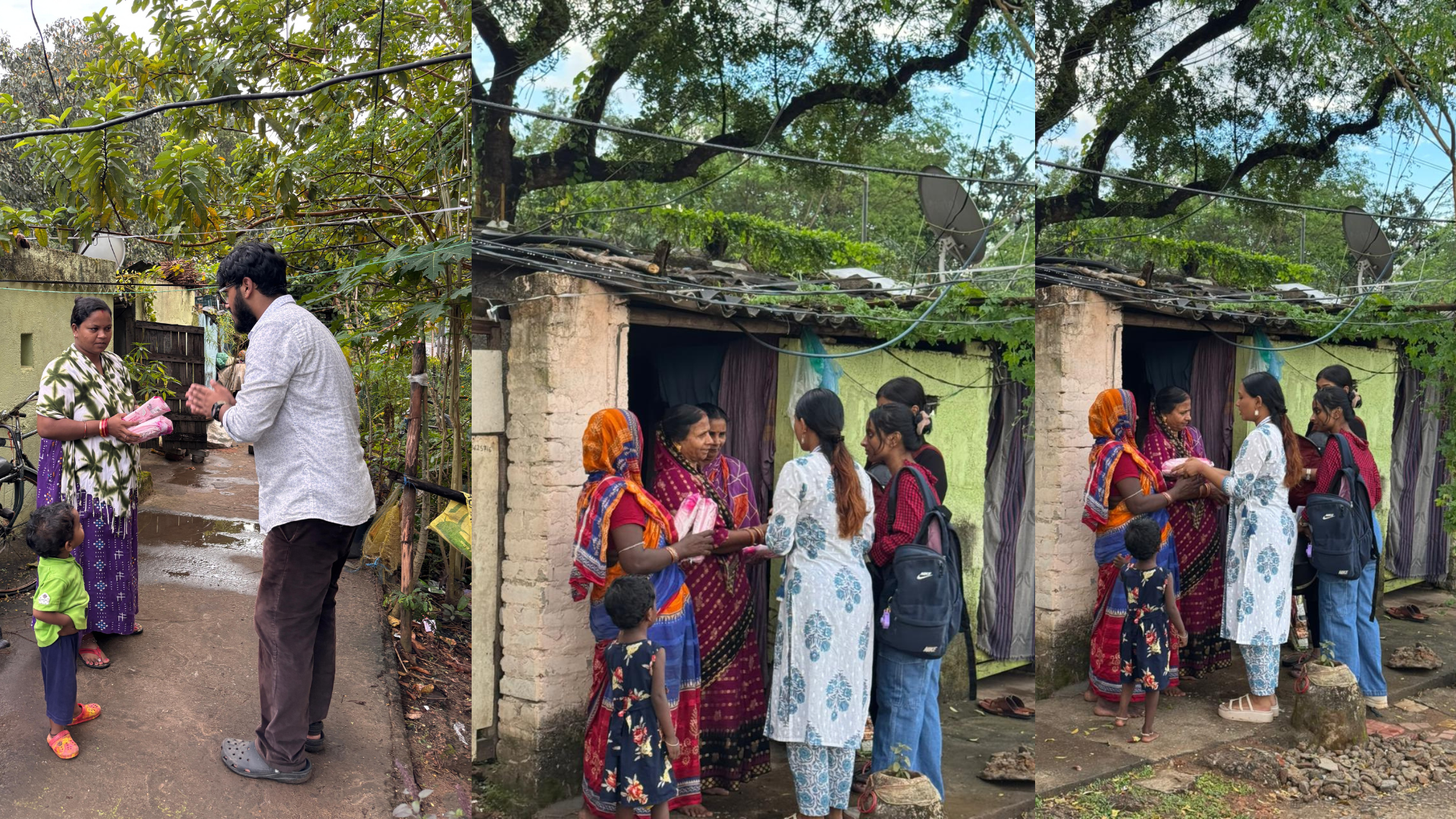
Since 2020, we have distributed 2,000+ hygiene kits and reached over 300 women through direct grassroots engagement.
📍 7 No Rail Gate, Michal Nagar
20th October 2020
Our inaugural distribution drive, taking the first step towards menstrual equity and awareness at the grassroots level.
📍 Sovabazar
3rd December 2023
Continued our mission by providing essential sanitary kits and educating young women in the historic district of Sovabazar.
📍 Sovabazar
22nd June 2024
Returned to Sovabazar for our summer edition, expanding our reach and reinforcing the importance of menstrual hygiene.
📍 Vani Vihar, Odisha
30th October 2025
Expanded our operations into Odisha, partnering with local communities to distribute kits and spread awareness.
Open Data & Research Reports
Empowering researchers and policymakers with transparent, verifiable datasets on menstrual health in India.
Period Poverty & Access
Comprehensive dataset detailing access to menstrual hygiene products across socioeconomic brackets globally, including India-specific findings.
Download PDF ↓Prior Menstrual Education
Survey results highlighting the critical gap in menstrual education before a girl's first period, with recommendations for governments.
Download PDF ↓Stigma & Menstrual Silence
Qualitative and quantitative data on the societal stigma surrounding menstruation in schools, homes, communities, and institutions.
Download PDF ↓Are you a Researcher?
We provide anonymised API access to our Q&A metadata to help drive further academic research into menstrual health in India.
Request API AccessWho We Are
Rigel Foundation is India's first home-grown non-profit organization dedicated entirely to fighting against women's menstrual problems and period poverty.
Born from a deeply rooted desire to shatter centuries-old stigmas, our foundation operates directly at the grassroots level. From our very first distribution drive to our expanding reach across multiple states, we operate on a simple, unwavering belief: menstrual health is a fundamental human right, not a luxury.
Meet the Person Behind MAA
The vision, heart, and leadership driving menstrual health awareness across India.

Udayaditya Parbat
Programme Director, Maa by Rigel
Udayaditya Parbat leads the Maa by Rigel programme with a deep commitment to breaking the silence around menstrual health in India. As Programme Director, he oversees the strategy, research, community outreach, and technology behind the platform — ensuring that every woman and girl, regardless of geography or income, has access to accurate, stigma-free information and support.
Driven by the belief that menstrual health is a fundamental human right, Udayaditya has been instrumental in building Maa from the ground up — curating evidence-based educational content, establishing connections with government health bodies, and creating a safe digital space that respects the privacy and dignity of its users.
"Every girl deserves to understand her own body — without fear, without shame, and without silence. That is what Maa stands for." — Udayaditya Parbat
The Team Behind the Mission

Suvaiyu Saha
Chairman Rigel Foundation
Be the Face of Maa
Join our mission to end period poverty. Whether you love creating content, working on the ground, or diving into data, there is a place for you.
Content Creator
Help us spread awareness through engaging social media posts, videos, and storytelling. Break the stigma digitally.
Apply Now →Volunteer
Join our grassroots distribution drives, coordinate local events, and work directly with women in the community.
Apply Now →Research
Work with our data team to study menstrual equity, write impactful reports, and advocate for policy change.
Apply Now →